Adobe Creative Suite
Motion Graphics Magic: An Introductory Guide to Premiere Pro Animations
If you're a seasoned Premiere Pro professional, you already know the power it wields as a video editing tool. But did you know that you can also use Premiere to create stunning motion graphics? That's right, Premiere Pro isn't just for cutting and splicing footage. It can also be a playground for unleashing your creativity with animations. In this guide, we'll dive into the world of motion graphics, revealing the magic that Premiere Pro can bring to your projects.
1. Getting Started: The Basics of Animation in Premiere Pro
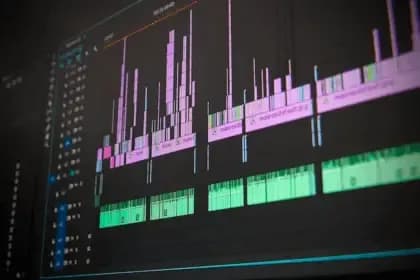
Animation in Premiere Pro revolves around keyframes. It's these that bring static elements to life. Whether it's text, graphics or even video clips, keyframes hold the power to make your animations dance, fade or zoom.
2. Working With Keyframes
To add keyframes, simply position your playhead where you want the animation to start, adjust your element's properties (position, scale, opacity, etc.) and click on the the stopwatch icon. Move the playhead to where you want the animation to end, tweak the properties again and you've set up your first animation! h2>3. Text Animation: Poetry In Motion/h2> p>Premiere Pro can turn plain text into a mesmerising dance of words. To test it out, go to the Essential Graphics panel, select your text layer and explore the Text properties. You can animate the position, scale, opacity and even add rotation. Try playing around with easing options for smoother transitions between keyframes - these can give your text a more dynamic and polished look.
4. Graphic Elements: Movement Of Shapes and Lines
Graphics are the backbone of motion design. So import your graphics, whether they're logos, icons or custom shapes and let your animations loose. Utilise the Transform effect to animate position, scale and rotation. Experiment with the blending modes to create captivating overlays and transitions. You'll begin to see how Premiere Pro isn't just for video, it can be a canvas for your imagination in many other ways too.
5. Transitions: Seamlessly Blend Scenes
Premiere Pro is great at seamless transitions, offering a variety in the Effects panel and the ability to also create custom transitions by animating the position and scale of your clips. By experimenting with masking, to reveal or hide elements, you'll add a touch of sophistication to your transitions. Your audience won't see the cuts, just see the beautiful result.
6. Adding Personality with Effects and Presets
Premiere Pro is packed with effects and presets that can elevate your motion graphics to another level. The Lumetri Colour capability can give your animations a cinematic flair so go to the Lumetri Colour panel and start experimenting. You might also try making your text effects more exciting using the VR Digital Glitch or VR Chromatic Aberrations effects. These are especially good at applying a futuristic effect. The Adobe help pages have more on this. The possibilities are endless! h2>7. Advanced Techniques: Express Yourself/h2> p>If you're ready to take your motion graphics to the next level, Premiere Pro has advanced tools that allow you to express your creativity without limits. The graph editor will let you fine-tune your animations with precision. The Responsive Design - Time feature allows you to create animations that adapt to changes in duration. It can be found in the Essential Graphics panel where you'll also find other clip-based settings, which apply to the whole graphic clip.
Conclusion: Premiere Pro, Your Motion Graphics Playground
In this quick tour of Premiere Pro animations, we've only scratched the surface of what Premiere can do for your creative projects. Whether you're a seasoned professional or just getting started in the world of motion graphics, Premiere Pro can be a great tool for turning static elements into dynamic, captivating visuals. So, fire it up, unleash your imagination and let the magic of motion graphics unfold in your projects. Remember, the more you experiment, the more you'll discover. Premiere Pro isn't just a tool; it's a canvas waiting for your creative strokes. Dive in and make your mark in the world of motion graphics!
Relevant sources
- Keyframes in Premiere Pro (opens in a new tab)
Adding, navigating and setting keyframes in Premiere Pro
- Premiere Pro Properties (opens in a new tab)
Understand how to modify clip properties
- Essential Graphics panel in Premiere Pro (opens in a new tab)
See how to access the Graphics workspace and the Essential Graphics panel
- Smooth motion in Premiere Pro (opens in a new tab)
How to make smooth motion in Premiere Pro
- Transform effect in Premiere Pro (opens in a new tab)
Learn about the wide array of video effects and transitions available
- Premiere Pro Blending modes (opens in a new tab)
See how Premiere Pro blends clips on different tracks
- Overlays and transitions in Premiere Pro (opens in a new tab)
Transitions are used to move a scene from one shot to the next
- Custom transitions in Premiere Pro (opens in a new tab)
Learn how to modify and customise transitions in the Premiere Pro Effect Controls panel and timeline
- Masking in Premiere Pro (opens in a new tab)
Use Masks to blur, cover, highlight, apply effects or colour-correct
- Lumetri Colour in Premiere Pro (opens in a new tab)
Use the Lumetri colour plugin for professional-quality colour grading in Premiere Pro
- Premiere’s VR Effects eg. Digital Glitch and Chromatic Aberrations (opens in a new tab)
Learn how Premiere Pro supports VR video
Want to go deeper?
Courses on this topic.
Adobe
Photoshop Introduction
Learn to edit photographs, build graphics and work with layers, masks and text in Adobe Photoshop. Ideal for beginners.

Adobe
Acrobat Intermediate
Build on Acrobat basics: create interactive forms, apply security settings, ensure accessibility compliance and automate PDF production tasks.

Adobe
Acrobat Introduction
Learn to create, edit and manage professional PDFs with Adobe Acrobat. Build essential document skills in one day.